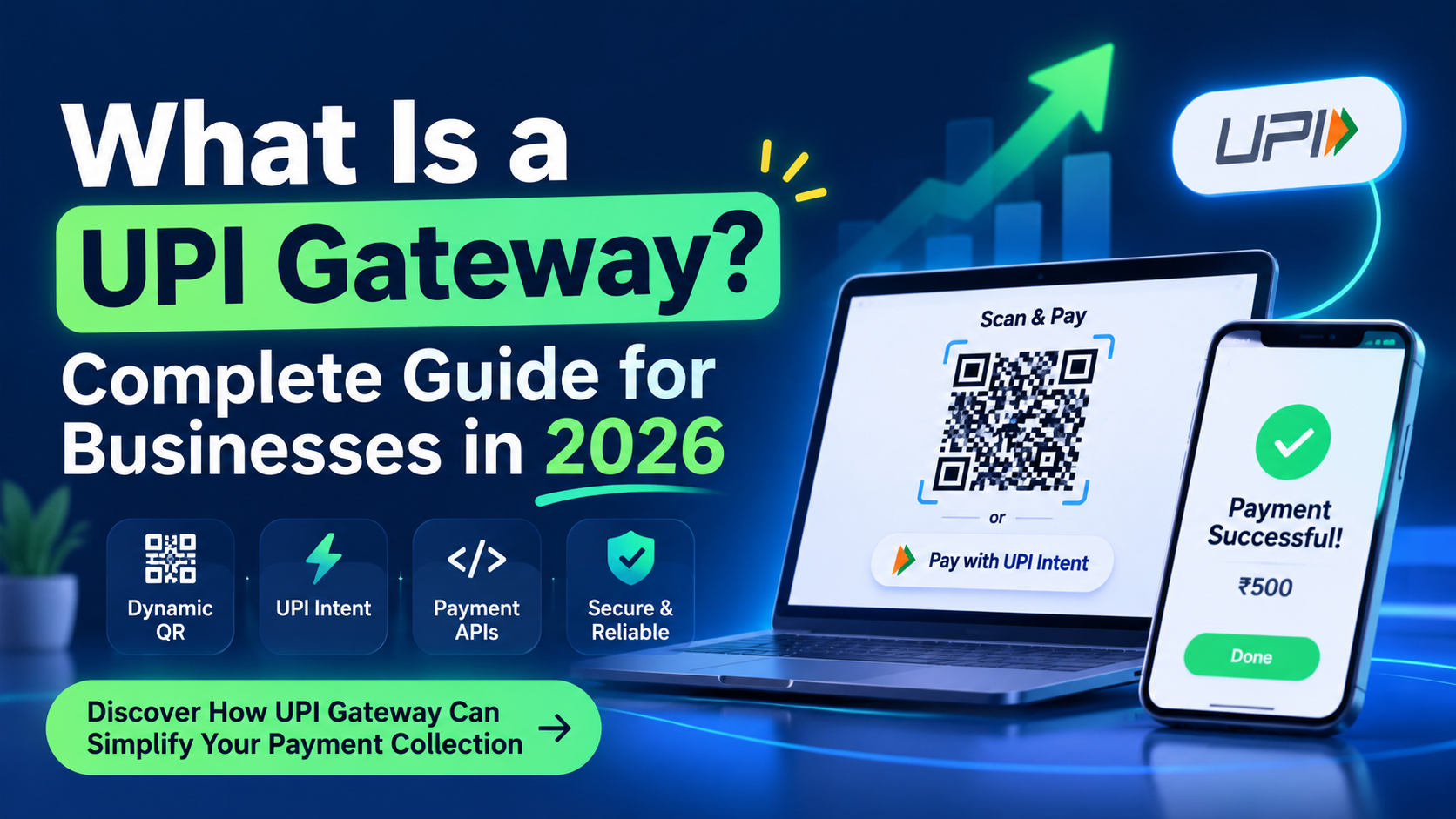
What Is a UPI Gateway? Complete Guide for Businesses in 2026
Learn what a UPI Gateway is, how it works, its benefits, Dynamic QR, UPI Intent, payment APIs, integration options and how businesses can accept UPI payments in 2026.
What Is a UPI Gateway? Complete Guide for Businesses in 2026
Digital payments have become an important part of running an online business in India. Whether you operate an e-commerce store, mobile application, SaaS platform or business website, providing customers with a simple payment option can make a big difference to their overall experience.
UPI is one of the most commonly used digital payment methods in India. Customers can pay directly from their bank accounts using UPI applications, QR codes and other supported payment methods.
But accepting UPI payments on a website or mobile application is not always as simple as displaying a UPI ID or uploading a QR code. Businesses also need a way to generate payment requests, identify incoming payments, verify transaction status and update orders automatically.
This is where a UPI Gateway becomes useful.
A UPI Gateway helps businesses connect their UPI payment setup with their website or application. Depending on the integration, it can support Dynamic UPI QR Codes, UPI Intent, payment APIs, automated payment verification and real-time status notifications.
In this complete guide, we will explain what a UPI Gateway is, how it works, its important features, benefits, integration methods and how businesses can choose the right UPI payment solution in 2026.
What Is a UPI Gateway?
A UPI Gateway is a payment technology solution that helps businesses accept and manage UPI payments through websites, mobile applications and online platforms.
It connects a business's payment interface with supported UPI payment methods and provides technology for creating payment requests and checking transaction status.
For example, imagine you operate an online store. A customer places an order worth ₹1,500 and selects UPI as the payment method.
Instead of asking the customer to manually enter your UPI ID and send a payment screenshot, your website can generate a payment request with a Dynamic UPI QR Code or supported UPI Intent option.
The customer completes the payment using a compatible UPI application. Your payment system can then check the transaction status and update the order after receiving reliable confirmation.
This makes the entire payment process more organised and reduces the need for manual verification.
In simple words: A UPI Gateway helps businesses connect UPI payments with their online systems and automate the payment collection process.
How Does a UPI Gateway Work?
A UPI Gateway works by connecting the customer's payment process with the merchant's website or application.
Although the technical setup can differ between providers, the general payment flow is quite simple.
Here is an example of how a typical UPI payment process works:
-
Customer places an order: The customer selects a product or service and proceeds to checkout.
-
Payment request is created: The website or application generates a payment request through an API.
-
UPI payment option appears: The customer receives a Dynamic QR Code or supported UPI Intent option.
-
Customer completes payment: The customer scans the QR code or opens a compatible UPI application.
-
Transaction verification: The payment system checks the transaction status using the supported verification method.
-
Payment confirmation: Once the payment is confirmed, the system updates the order status.
-
Webhook notification: The merchant's website or application can receive a notification about the payment result.
This process helps businesses reduce manual work and provide customers with a smoother checkout experience.
Why Do Businesses Need a UPI Gateway in 2026?
Online businesses are handling more transactions through websites, applications and digital platforms. As the number of orders increases, manually checking every payment can become difficult.
For a business receiving only a few payments every day, manual verification might seem manageable. However, when hundreds of customers are making payments, the process becomes time-consuming.
A UPI Gateway can help solve several common problems.
1. Reduce Manual Payment Verification
Without an automated system, businesses may need to check bank transactions manually and compare them with customer orders.
Automated payment verification can reduce this workload by checking transaction information through supported integration methods.
2. Generate Dynamic UPI QR Codes
A Dynamic UPI QR Code can be generated for a specific order or payment amount.
This makes it easier to associate payment requests with individual orders and reduces confusion between multiple transactions.
3. Improve Customer Checkout Experience
Customers can choose from supported payment options instead of manually entering payment details.
Depending on the integration, they may scan a QR code or open their preferred compatible UPI application.
4. Automate Order Updates
After successful payment verification, the website or application can automatically update the order status.
For example, an e-commerce store can move an order from Pending Payment to Payment Completed.
5. Manage Payments Through APIs
Businesses with custom websites and mobile applications can use payment APIs to create payment requests, retrieve transaction information and manage payment status.
6. Handle More Transactions Efficiently
Automation helps businesses manage increasing payment volumes without depending entirely on manual processes.
Important Features of a UPI Gateway
Before choosing a UPI Gateway, businesses should understand which features are useful for their operations.
Here are some important features to consider.
1. Dynamic UPI QR Code Generation
Dynamic QR generation is one of the most useful features of a modern UPI payment integration.
Unlike a static QR code, which generally represents the same payment details every time, a dynamic QR can be generated for individual transactions.
For example:
-
Customer A places an order worth ₹500.
-
Customer B places an order worth ₹1,200.
-
Customer C places an order worth ₹2,000.
The system can generate separate payment requests for each customer.
This makes payment tracking and order matching easier.
2. UPI Intent Payments
UPI Intent allows a website or mobile application to initiate a payment through a compatible UPI application.
For example, when a customer selects a UPI payment option on an Android device, the system may show supported UPI applications installed on that device.
The customer selects an application, reviews the payment information and authorises the transaction.
UPI Intent can make mobile checkout more convenient because customers do not always need to manually enter the payment details.
However, application availability and payment confirmation behaviour can vary depending on the device, UPI application and integration.
3. Automated Payment Verification
Payment verification is an important part of online payment collection.
A customer clicking the Pay button does not mean that the payment has been completed.
Similarly, returning to a website after opening a UPI application does not automatically confirm a successful transaction.
A proper payment verification system checks the transaction through its supported payment data source and confirms the actual status.
This helps businesses avoid marking unpaid orders as successful.
4. Payment Status API
A Payment Status API allows websites and applications to retrieve the latest available status of a payment request.
For example, a developer can use an API to check whether a transaction is:
-
Pending
-
Successful
-
Failed
-
Expired
-
Processing
The exact status values depend on the provider's API.
This feature is useful for custom checkout systems, e-commerce platforms and mobile applications.
5. Webhooks and Instant Notifications
Webhooks allow a payment system to send an automatic notification to a merchant's server when a relevant payment event occurs.
For example, after a payment is successfully verified, the system can send a notification to the website.
The website can then update the order, activate a service or generate a confirmation message.
Developers should also implement webhook signature verification, duplicate-event protection and appropriate status checks to keep the integration secure and reliable.
6. Developer-Friendly Payment APIs
Businesses with custom software often need more control over their payment process.
A developer-friendly UPI Payment API can help them:
-
Create payment requests.
-
Generate Dynamic QR Codes.
-
Retrieve transaction status.
-
Receive webhook notifications.
-
Connect payment functionality with existing software.
-
Automate order management.
Good API documentation and testing support can make the integration process easier.
7. Website and Mobile App Integration
A UPI Gateway should support the platform on which the business operates.
Common integration requirements include:
-
Custom PHP websites.
-
Laravel applications.
-
WordPress websites.
-
Android applications.
-
iOS applications.
-
Custom e-commerce platforms.
-
SaaS applications.
The available integration methods depend on the provider.
UPI Gateway vs Traditional Payment Gateway
Many business owners wonder whether a UPI Gateway and a traditional payment gateway are the same thing.
They are related, but their functionality and scope can be different.
A traditional payment gateway commonly supports multiple payment methods, such as debit cards, credit cards, net banking, wallets and UPI.
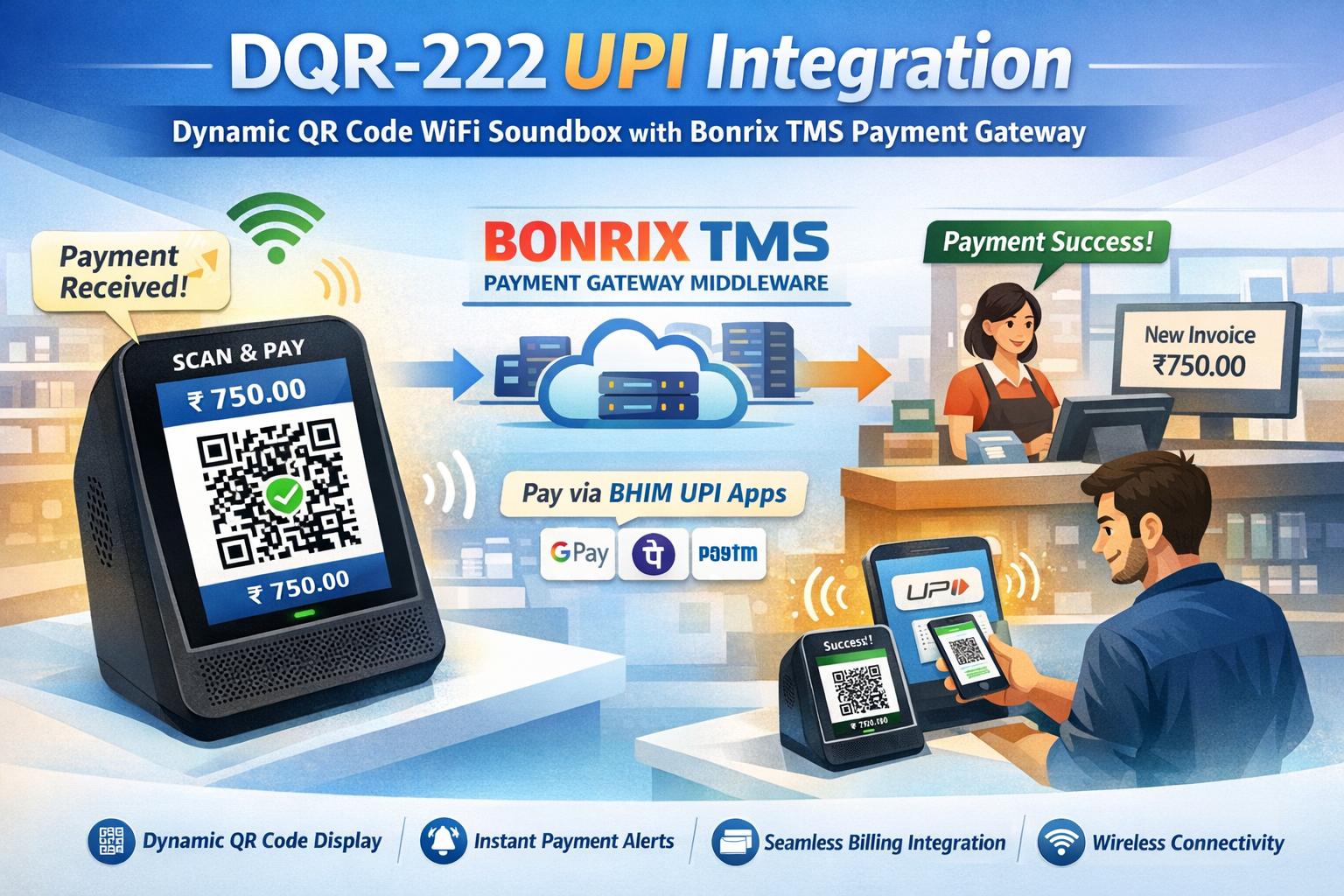
A UPI-focused payment solution concentrates mainly on UPI-based payment collection and automation.
Here is a simple comparison:
| Feature | Traditional Payment Gateway | UPI-Focused Gateway |
|---|---|---|
| Main payment method | Multiple payment methods | UPI-focused |
| UPI QR Code | Depends on provider | Core feature |
| Dynamic QR | Provider dependent | Common feature |
| UPI Intent | Provider dependent | Can be supported |
| Payment APIs | Usually available | Can be available |
| Webhooks | Provider dependent | Can be supported |
| Card payments | Often supported | Not necessarily supported |
| Net banking | Often supported | Not necessarily supported |
| Payment automation | Available | Core focus |
The right choice depends on your business requirements.
If you want to accept multiple payment methods, a traditional payment gateway may be more suitable.
However, if your business mainly collects UPI payments and needs Dynamic QR generation, UPI Intent and payment verification, a UPI-focused solution may be worth considering.
Important: The term UPI Gateway describes a type of payment technology or service positioning. It does not automatically mean that every provider is an authorised Payment Aggregator or bank. The actual legal and regulatory classification depends on the activities performed and how funds are handled.
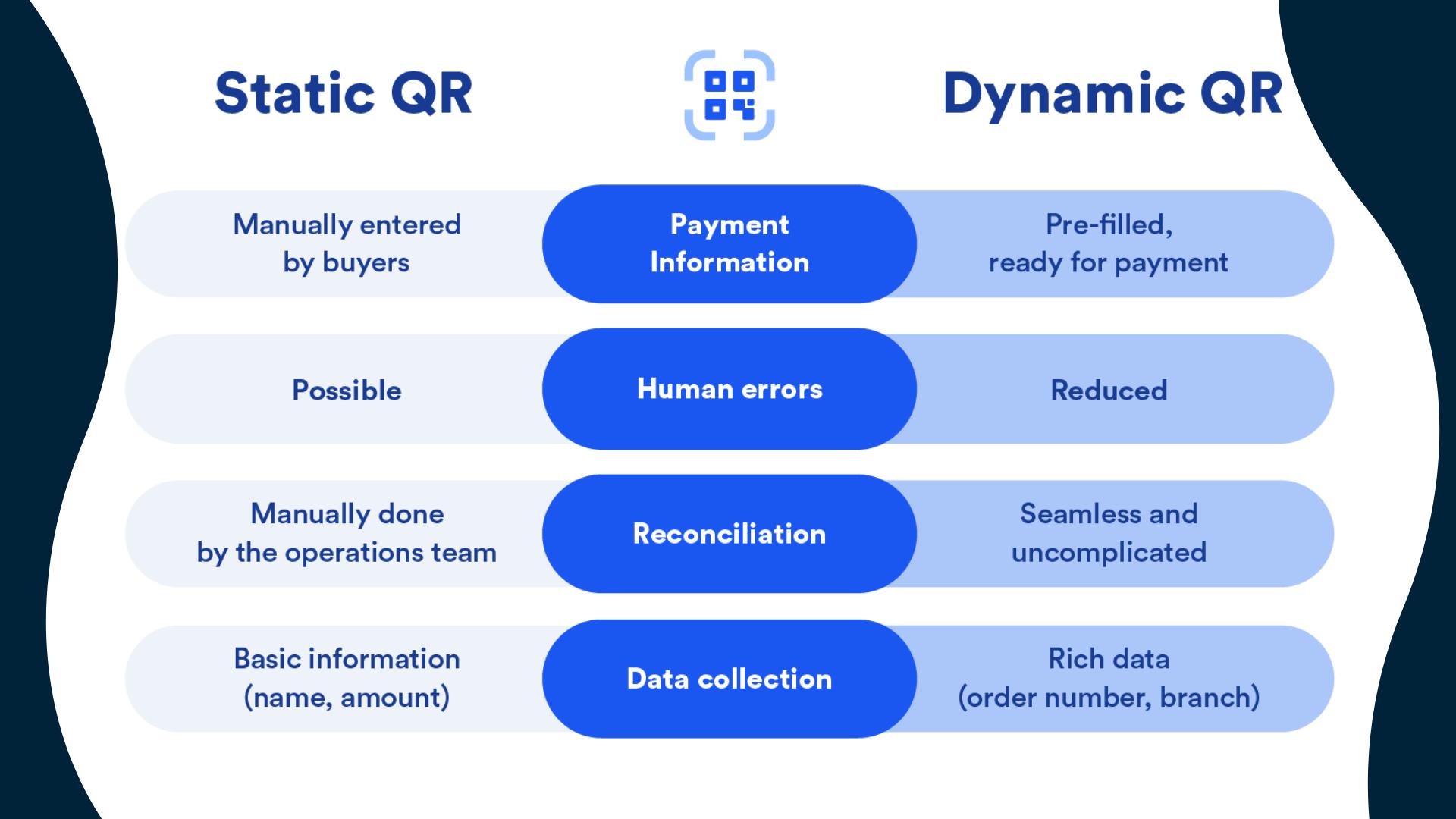
What Is the Difference Between Static QR and Dynamic UPI QR?
QR codes are widely used for UPI payments, but there is an important difference between static and dynamic QR codes.
Static UPI QR Code
A static QR code contains fixed payment information, such as a merchant's UPI ID.
The customer scans the QR code and enters the payment amount where permitted.
Static QR codes are useful for small businesses, retail shops and offline payment collection.
Dynamic UPI QR Code
A Dynamic UPI QR Code is generated for a particular payment request.
It can contain information such as:
-
Merchant UPI ID.
-
Payment amount.
-
Transaction reference.
-
Order-related information.
For example, if a customer purchases a product worth ₹999, the website can generate a QR code associated with that payment request.
This helps the business identify and match transactions more efficiently.
Which One Is Better?
For basic offline collection, a static QR code can be sufficient.
For websites, mobile applications and e-commerce stores, Dynamic UPI QR Codes can offer better payment tracking and automation when properly integrated.
What Is UPI Intent and How Does It Work?
UPI Intent is a payment initiation method that allows a website or application to open a compatible UPI payment application with payment details.
It is particularly useful for customers making payments through smartphones.
For example, suppose a customer is purchasing a subscription for ₹499 through your Android application.
The application creates a payment request and offers a UPI Intent option.
The customer selects a compatible UPI app, reviews the payment details and authorises the payment.
After the payment process, the merchant's application needs to verify the transaction using its supported payment verification mechanism.
UPI Intent is useful because:
-
It provides a convenient mobile payment experience.
-
Customers can use compatible UPI applications.
-
Payment details can be passed through a supported payment request.
-
It can reduce manual entry of payment information.
However, developers should not rely only on the response received from the UPI application. The final payment status should be verified independently through a reliable supported mechanism.
How to Integrate a UPI Gateway into a Website
If you operate a website, integrating a UPI Gateway can help automate your payment process.
The exact implementation depends on your website technology and payment provider.
Generally, the process involves the following steps.
Step 1: Choose a UPI Payment Solution
First, select a provider that offers the payment features your business needs.
Check its QR generation, API support, verification methods, webhook functionality and pricing.
Step 2: Connect Your Merchant UPI Setup
Depending on the provider's model, you may be able to connect an eligible existing Merchant UPI ID or QR code.
The required merchant verification and bank or acquiring-partner arrangements should be completed before accepting live payments.
Step 3: Get API Credentials
After onboarding, the provider may supply API credentials and integration documentation.
These credentials allow your website to communicate with the payment system.
Step 4: Integrate the Payment API
Your developer can integrate the API into your checkout page.
When a customer places an order, the website sends the required payment information and receives a payment request or QR response.
Step 5: Configure Payment Verification
Configure the supported payment status verification method.
Your website should verify actual transaction status before confirming an order.
Step 6: Set Up Webhooks
Webhooks can notify your server when a payment event is received.
Your developer should validate notifications and handle duplicate events safely.
Step 7: Test Before Going Live
Test different scenarios, including:
-
Successful payments.
-
Failed transactions.
-
Pending transactions.
-
Expired payment requests.
-
Duplicate notifications.
-
Incorrect payment amounts.
Once testing is complete, you can move to the live environment.
UPI Gateway Integration for Mobile Applications
Mobile applications often require a different payment experience compared to websites.
For Android and iOS applications, businesses can integrate UPI payment functionality using supported APIs and payment initiation methods.
A typical mobile integration may include:
-
Customer selects UPI at checkout.
-
Application creates a payment request.
-
Customer sees a QR or supported UPI Intent option.
-
Compatible UPI application opens when Intent is used.
-
Customer authorises the transaction.
-
Backend checks the payment status.
-
Application displays the confirmed payment result.
For developers, it is important to keep payment verification on the backend rather than trusting only client-side responses.
This approach is useful for subscription applications, service platforms, e-commerce apps and other businesses that accept UPI payments.
UPI Gateway for Shopify and E-commerce Stores
E-commerce businesses need a payment system that can work with their existing checkout and order management process.
A UPI Gateway integration for Shopify or other e-commerce platforms can help customers pay through UPI while allowing the store to manage payment updates.
Some useful requirements include:
-
Payment request generation.
-
Dynamic QR support.
-
UPI payment options.
-
Transaction verification.
-
Order status updates.
-
Payment notifications.
-
Refund and reconciliation workflows where supported.
For Shopify stores, merchants should check whether the provider offers an official Shopify app, supported payment integration or a compatible custom checkout method.
Not every API-based payment solution can be directly installed as a Shopify payment provider.
Choose an integration that is compatible with your Shopify plan, checkout setup and platform requirements.
What Is a UPI Payment API?
A UPI Payment API is a set of technical endpoints that allows a website, mobile application or software platform to communicate with a payment system.
Instead of manually managing every payment request, developers can use APIs to automate different payment-related activities.
For example, a UPI Payment API may provide endpoints for:
-
Creating payment requests.
-
Generating Dynamic QR Codes.
-
Retrieving transaction information.
-
Checking payment status.
-
Receiving payment notifications.
-
Managing supported payment events.
APIs are especially useful for businesses with custom applications or websites.
They allow developers to connect the payment system with existing order management, customer management and business software.
How Much Does a UPI Gateway Cost in 2026?
The cost of a UPI Gateway depends on the provider, integration requirements, transaction model and additional services.
Some providers offer subscription-based plans, while others may charge setup fees, monthly charges or transaction-based fees.
Before choosing a provider, understand the complete pricing structure.
Important things to check include:
1. Setup Fees: Does the provider charge anything for onboarding or integration?
2. Monthly Subscription: Is there a fixed monthly or yearly plan?
3. Transaction Charges: Does the provider charge a percentage or fixed fee for each transaction?
4. API Access: Are API and webhook features included in the plan?
5. Additional Costs: Are there extra charges for technical support, integrations or custom development?
Is There a Free UPI Gateway?
Some platforms offer a free plan or trial to help businesses explore their payment integration features.
A Free UPI Gateway may provide limited API access, basic payment collection features or a restricted number of transactions.
However, free does not always mean that every service involved in the payment process is completely free.
Merchants should check whether their bank, acquiring partner or other payment participants charge any applicable fees.
If you are comparing free UPI gateway options, always check the features, transaction limits, support and actual pricing conditions before making a decision.
How to Choose the Best UPI Gateway for Your Business
Choosing the right UPI Gateway is not just about finding the lowest price.
You should consider the features that will make your payment operations easier.
Here are some important factors.
1. Check Payment Verification
Make sure the provider offers a reliable transaction verification method.
Never depend only on customer screenshots or browser redirects.
2. Look for Dynamic QR Support
Dynamic QR generation is useful for businesses that receive multiple payments every day.
3. Check API Documentation
Good documentation helps developers integrate payment functionality with less confusion.
4. Understand the Pricing
Compare setup fees, subscription costs and transaction-related charges.
5. Check Webhook Support
Webhook notifications can make order updates and payment automation easier.
6. Verify Settlement Arrangements
Understand where the funds are received, who handles settlement and what bank or acquiring arrangements apply.
Do not assume that every UPI Gateway offers direct settlement or instant settlement.
7. Evaluate Technical Support
A good technical support team can help resolve integration problems and payment-related issues.
Common Problems Businesses Face Without UPI Payment Automation
Many online businesses start by accepting UPI payments manually.
Initially, this may work fine, but problems can appear when the number of transactions increases.
Some common issues include:
-
Customers sending incorrect payment amounts.
-
Missing payment screenshots.
-
Difficulty matching transactions with orders.
-
Delayed order confirmation.
-
Duplicate payment notifications.
-
Manual checking of bank transactions.
-
Customer complaints about pending payments.
-
Difficulty managing multiple payment requests.
A properly integrated UPI payment automation solution can help reduce these problems.
It provides a more organised way to create payment requests, verify transactions and update order statuses.
Is a UPI Gateway Safe for Online Businesses?
A UPI Gateway can support a safer and more organised payment workflow when it is implemented correctly.
However, security depends on the provider, payment infrastructure and integration practices.
Before using a payment solution, consider these points:
-
Use HTTPS on your website.
-
Keep API credentials secure.
-
Never expose secret keys in frontend code.
-
Verify payment status on the server.
-
Validate webhook signatures where supported.
-
Prevent duplicate payment processing.
-
Maintain transaction logs.
-
Follow your bank's and payment partner's security requirements.
Businesses should also understand the difference between payment initiation and payment confirmation.
A payment request being generated does not mean the customer has successfully paid.
Always use a trusted verification mechanism before confirming an order.
UPI Gateway vs Merchant UPI ID: What Is the Difference?
A Merchant UPI ID is an identifier used to receive UPI payments.
A UPI Gateway is a technology layer that can connect UPI payment collection with an online business system.
For example, a merchant may already have a business UPI ID or QR code.
But if the merchant wants to accept payments through a website and automatically identify which customer has paid for which order, additional payment automation technology may be required.
A UPI Gateway can provide features such as Dynamic QR generation, payment requests, transaction verification, APIs and webhooks.
In simple terms:
-
Merchant UPI ID: Used for receiving payments.
-
UPI QR Code: Used to initiate payments by scanning.
-
UPI Gateway: Helps connect payment collection with website or application workflows.
-
Payment API: Allows software to communicate with the payment system.
Why Choose a UPI-Focused Payment Solution?
Businesses that primarily accept UPI payments may not need every feature offered by a multi-method payment platform.
A UPI-focused solution can be useful when the main requirement is to connect an existing merchant payment setup with a website or application.
For example, a business may want to:
-
Use its existing eligible Merchant UPI ID or QR.
-
Generate Dynamic UPI QR Codes.
-
Offer supported UPI Intent payments.
-
Automate payment verification.
-
Receive payment status notifications.
-
Connect payment functionality using APIs.
-
Manage payments from its existing business dashboard.
The exact features depend on the provider and its supported integrations.
Introducing UPI-Gateway.in: UPI Payment Automation for Online Businesses
UPI-Gateway.in is designed around the idea of making UPI payment collection and verification easier for online businesses.
Instead of focusing only on displaying a payment QR code, the platform's approach is to connect merchant payment details with technology that can automate payment-related activities.
Businesses can explore features such as:
-
Dynamic UPI QR Code Generation.
-
UPI Intent Payment Options.
-
Automated Payment Verification.
-
Payment Status APIs.
-
Webhook Notifications.
-
Developer-Friendly Integration.
-
Website and Mobile App Support.
-
E-commerce Integration.
-
Merchant UPI Connectivity.
The solution is intended for businesses that want to connect their existing eligible merchant payment setup with their online platforms.
How Can UPI-Gateway.in Help Your Business?
Suppose you operate an online business and already have a Merchant UPI ID or business QR code.
You want to connect it with your website so customers can make payments without manually sending screenshots.
With a suitable integration, your business can generate payment requests, display QR codes or supported UPI Intent options, verify transactions and update payment status automatically.
This can help reduce manual work and create a more convenient checkout experience.
Want to explore UPI payment automation for your website or application?
Visit UPI-Gateway.in and explore the available integration options.
Get Your UPI Gateway and simplify your online payment collection process.
Frequently Asked Questions About UPI Gateway
1. What is a UPI Gateway?
A UPI Gateway is a payment technology solution that helps businesses accept and manage UPI payments through websites and mobile applications. It can support Dynamic QR Codes, UPI Intent, payment APIs and automated transaction verification.
2. How does a UPI Payment Gateway work?
A UPI Payment Gateway creates a payment request for a customer. The customer completes the payment using a supported UPI application. The system then verifies the transaction and communicates the payment status to the merchant's website or application.
3. Is there a free UPI Gateway?
Some providers offer free plans or trials with limited features. However, businesses should check subscription conditions, transaction limits and any applicable bank or payment-partner charges.
4. What is a Dynamic UPI QR Code?
A Dynamic UPI QR Code is generated for a specific payment request. It can include payment information such as the merchant's UPI ID, amount and transaction reference, making it easier to track individual payments.
5. What is UPI Intent?
UPI Intent is a method of initiating a payment through a compatible UPI application. It allows customers to open a supported payment app with the required payment information.
6. Can I integrate a UPI Gateway into my website?
Yes. A compatible UPI Gateway can be integrated into a website using APIs, plugins or other supported integration methods. The exact process depends on your website technology and provider.
7. Can I use a UPI Gateway in an Android application?
Yes. UPI payment functionality can be integrated into Android applications using supported APIs and payment initiation methods. Developers should verify the final payment status through the backend.
8. Can I integrate a UPI Gateway with Shopify?
Yes, where the provider offers a compatible Shopify integration or supported custom checkout method. Check platform compatibility before choosing a solution.
9. What is the difference between UPI QR and UPI Intent?
UPI QR allows customers to scan a QR code using a UPI application to initiate payment. UPI Intent allows a website or application to open a compatible UPI application with payment details.
10. Does a UPI Gateway support automated payment verification?
Many UPI payment solutions offer automated verification through supported payment data sources, APIs or other integration methods. The verification capabilities depend on the provider.
11. Can I use my existing Merchant UPI ID with a UPI Gateway?
Some UPI-focused technology solutions support integration with an existing eligible Merchant UPI ID or QR code. Compatibility depends on the merchant account, bank or acquiring arrangements and the provider's integration model.
12. Is a UPI Gateway the same as a Payment Aggregator?
No. These terms do not automatically mean the same thing. A technology provider that only facilitates payment-related technology without handling funds may have a different role from a Payment Aggregator that collects and settles funds. The actual classification depends on the activities performed and applicable regulations.
Final Thoughts
UPI payments have created new opportunities for businesses to make online transactions simpler for their customers.
However, accepting payments is only one part of the process. Businesses also need to manage payment requests, transaction verification, order updates and customer notifications.
A UPI Gateway can help bring these activities together through Dynamic UPI QR Codes, UPI Intent, APIs and payment automation.
Whether you operate an e-commerce store, SaaS platform, website or mobile application, choosing the right UPI payment integration can make your payment workflow more organised and efficient.
If your business is looking for a way to connect its existing merchant payment setup with online payment automation, explore the available solutions at UPI-Gateway.in.
Start building a smoother UPI payment experience for your customers in 2026.
Ready to connect UPI to your checkout?
JaduPe provides current service, eligibility and plan details. Review them before you begin.
Explore JaduPe ↗Related articles.
Free UPI Gateway: How Businesses Can Accept UPI Payments at Low Cost
Looking for a free UPI Gateway to accept online payments without expensive transaction charges? Discover how businesses can use Dynamic UPI QR Codes, UPI Intent, Merchant UPI IDs and payment APIs to simplify UPI payment collection and automate payment verification at a lower cost.
Read article →
UPI Gateway: Complete Guide for Businesses in 2026
Learn what a UPI Gateway is, how it works, and explore Dynamic QR, UPI Intent, payment APIs, automated verification and integration for online businesses.
Read article →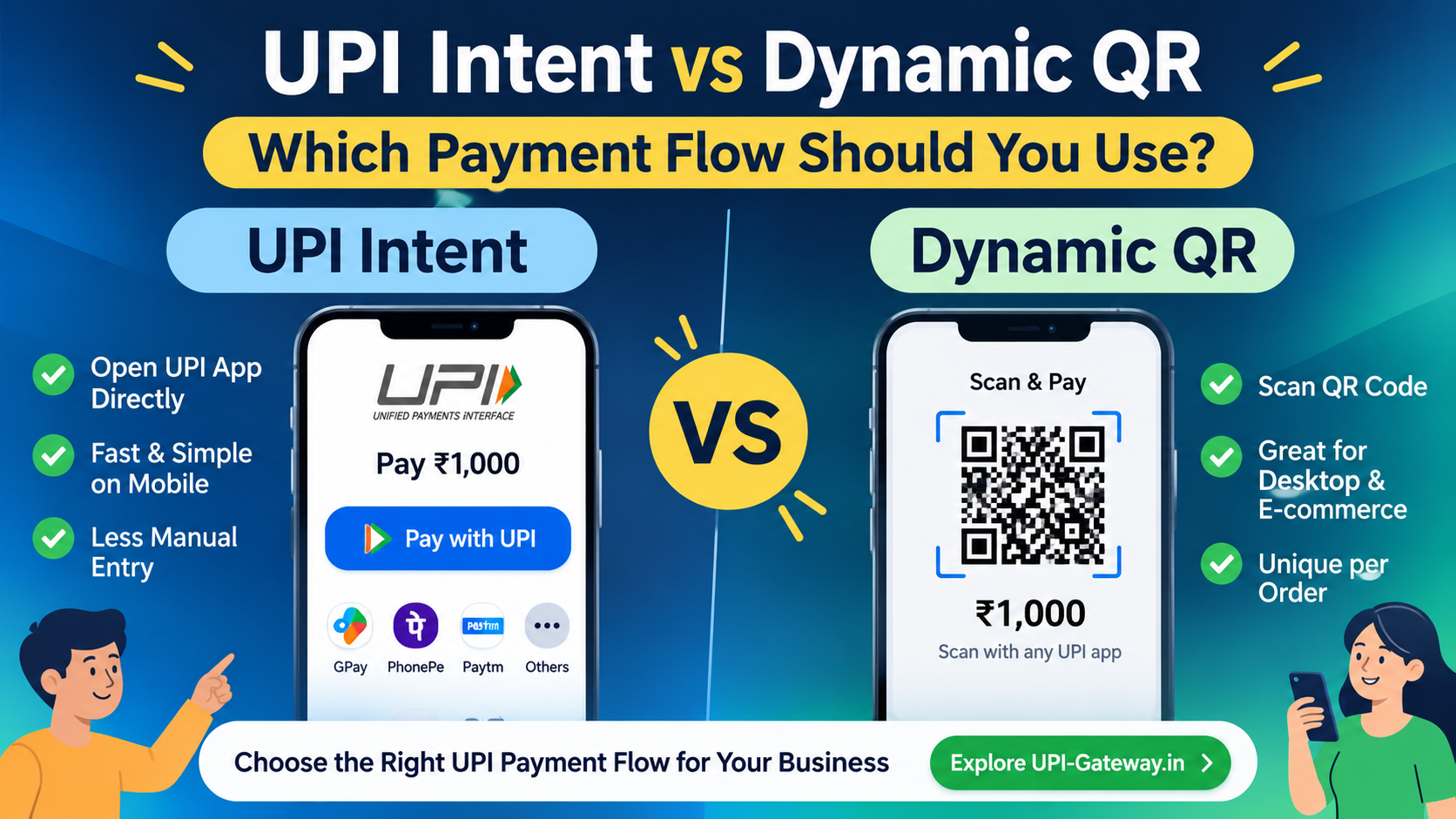
UPI Intent vs Dynamic QR – Choose the Right Payment Flow
Should your business use UPI Intent or Dynamic QR? Understand the differences, benefits and payment integration options for online businesses.
Read article →