UPI Gateway: Complete Guide for Businesses in 2026
Learn what a UPI Gateway is, how it works, and explore Dynamic QR, UPI Intent, payment APIs, automated verification and integration for online businesses.
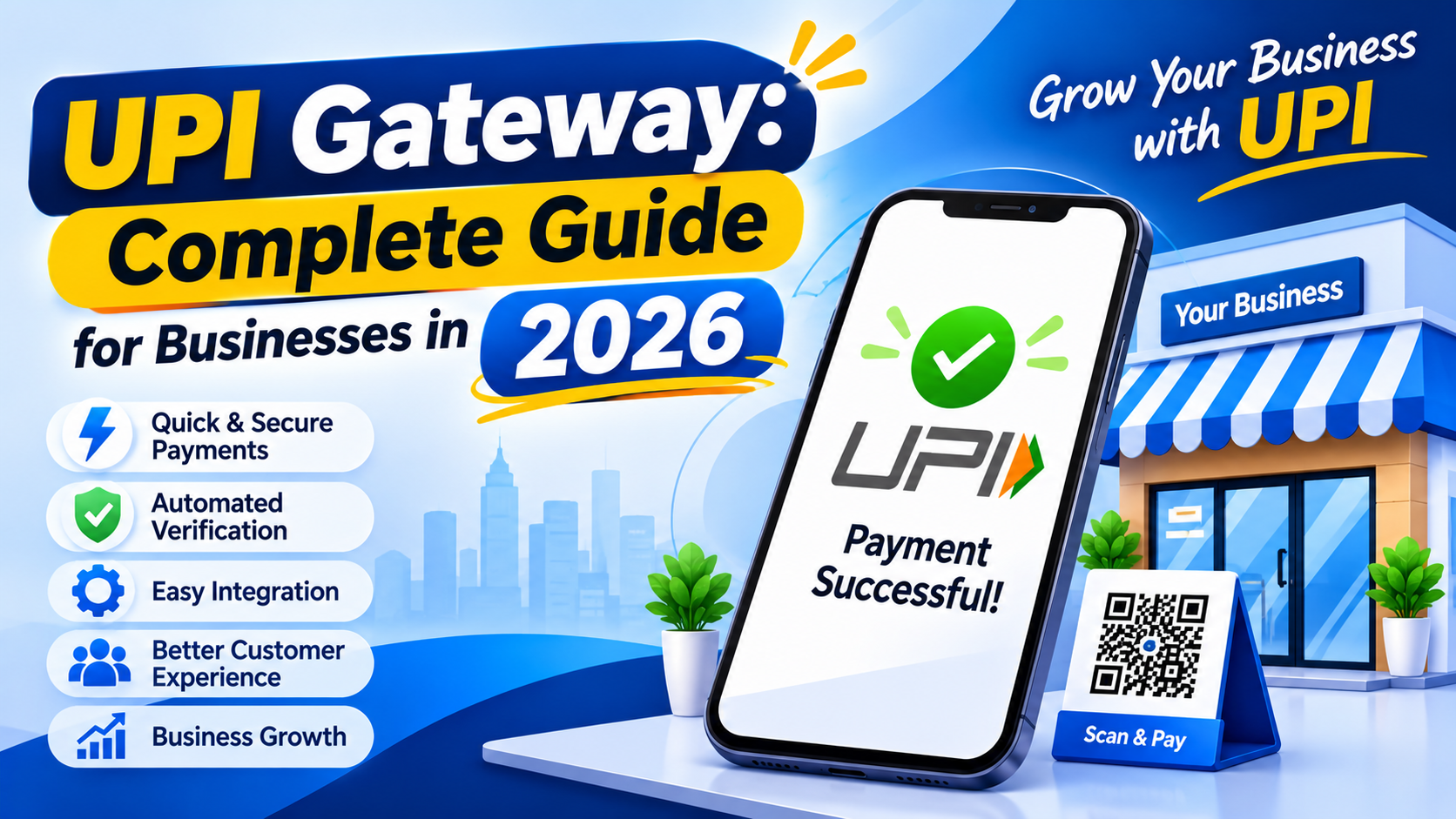
UPI Gateway: Complete Guide for Businesses in 2026
Digital payments have changed the way businesses collect money online. Today, customers expect fast, convenient and secure payment options when purchasing products or services through websites and mobile applications.
In India, Unified Payments Interface (UPI) has become an important part of the digital payment ecosystem. From small online stores to large e-commerce businesses, companies are increasingly looking for simple ways to accept UPI payments from their customers.
This is where a UPI Gateway becomes useful.
A UPI Payment Gateway allows businesses to accept digital payments through UPI-based payment methods, including QR codes, UPI applications and supported payment integration options.
Modern UPI gateway solutions also offer features such as Dynamic UPI QR generation, UPI Intent, payment APIs, automated payment verification and webhook notifications.
Whether you operate an e-commerce website, Shopify store, SaaS platform or mobile application, choosing the right UPI Gateway can help simplify your payment collection process.
In this complete guide, we will explain what a UPI Gateway is, how it works, its important features, integration methods, pricing considerations and how businesses can choose a suitable UPI payment solution in 2026.
What Is a UPI Gateway?
A UPI Gateway is a payment technology solution that helps businesses accept payments through Unified Payments Interface (UPI).
It connects a business website or mobile application with a supported payment infrastructure to create payment requests, display QR codes, initiate supported UPI payment flows and receive payment status information.
Instead of manually managing every payment, businesses can use a UPI payment gateway to organize their payment collection process through APIs and automated workflows.
Depending on the provider and integration, a UPI Gateway may offer:
-
Dynamic UPI QR Code generation
-
UPI Intent payment options
-
Merchant UPI ID integration
-
Automated payment verification
-
Payment status APIs
-
Webhook notifications
-
Website and mobile application integration
-
E-commerce payment support
-
Developer-friendly API documentation
The main purpose of a UPI Gateway is to make online UPI payment collection easier for businesses and customers.
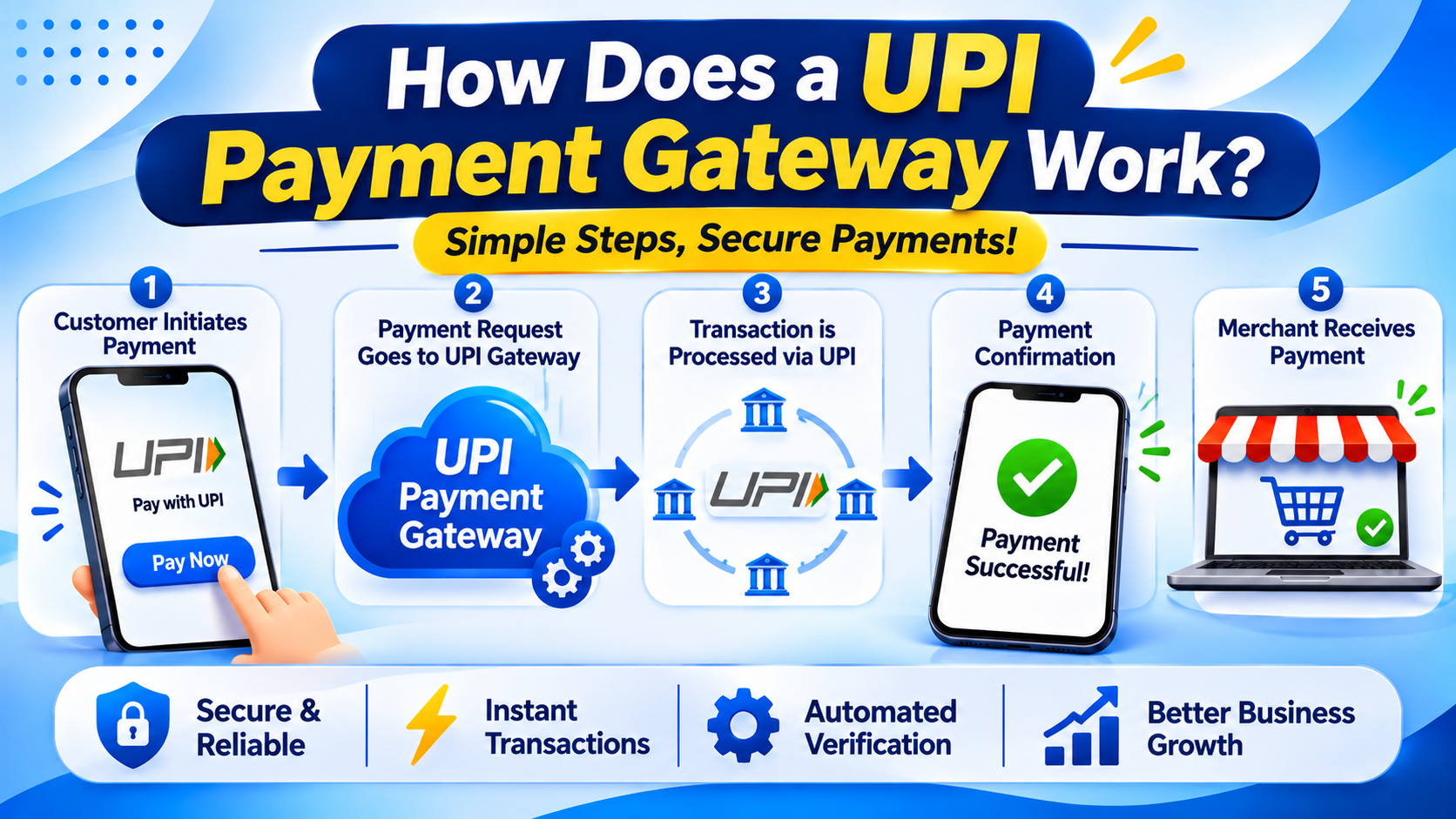
How Does a UPI Payment Gateway Work?
A UPI Payment Gateway generally works by connecting the customer's payment application with the merchant's payment setup through supported payment infrastructure.
Here is a simplified explanation of the payment process.
Step 1: Customer Places an Order
A customer visits an online store or application, selects a product or service and proceeds to checkout.
Step 2: Payment Request Is Created
The website or application creates a payment request with details such as the amount, order reference and other required information.
Step 3: Customer Selects UPI Payment
The customer can choose an available UPI payment option, such as scanning a QR code or opening a supported UPI application through UPI Intent.
Step 4: Customer Completes the Payment
The customer authorizes the payment using their UPI application.
Step 5: Payment Status Is Verified
The connected payment infrastructure processes the transaction information and provides the applicable payment status.
Step 6: Website Receives Payment Updates
The website or application receives payment status information through supported APIs or webhook notifications and updates the order accordingly.
This automated workflow helps reduce manual payment checking and makes online payment management more efficient.
Important Features of a Modern UPI Gateway
A good UPI Payment Gateway should offer features that make payment collection convenient for customers and easy to manage for businesses.
Let's understand some important features.
1. Dynamic UPI QR Code
Dynamic UPI QR is one of the useful features of modern UPI payment integration.
Unlike a static QR code that is reused for multiple transactions, a Dynamic UPI QR can be generated for an individual payment request.
It can contain relevant payment details such as:
-
Payment amount
-
Merchant payment information
-
Transaction reference
-
Payment request details
Dynamic QR technology helps businesses associate payment requests with individual orders.
It is useful for e-commerce stores, online service providers and applications that process multiple transactions.
2. UPI Intent Payment
UPI Intent allows customers to initiate a payment through a supported UPI application.
When a customer selects this option, the website or application can open an available compatible payment application with the relevant payment information.
The customer can then review and authorize the transaction.
UPI Intent can provide a convenient checkout experience, particularly for mobile users.
However, its availability depends on device compatibility, installed payment applications and the supported integration method.
3. Automated Payment Verification
Manual payment verification can become difficult when businesses receive a large number of UPI transactions.
A UPI Gateway with supported automated verification capabilities can process transaction information and provide payment status updates.
This helps businesses reduce dependence on manually checking screenshots and transaction details.
Payment confirmation should always depend on reliable verification rather than customer-submitted screenshots alone.
4. UPI Payment API
A UPI Payment API allows developers to connect payment functionality with their existing websites, applications and software platforms.
Through API integration, businesses can create payment requests, retrieve supported payment information and manage transaction status.
APIs are particularly useful for developers who want to build custom checkout experiences.
5. Payment Status Webhooks
Webhooks help applications receive automatic notifications when supported payment events occur.
Instead of repeatedly requesting the payment status from an API, a connected application can receive an HTTP notification when a relevant event is generated.
Common benefits include:
-
Automatic payment notifications
-
Reduced repeated API requests
-
Easier order status management
-
Better application workflows
-
Faster communication between systems
6. Website and Mobile App Integration
A modern UPI Gateway should support integration with different software platforms.
Depending on the provider, businesses can integrate payment functionality into:
-
PHP websites
-
Laravel applications
-
Node.js platforms
-
Android applications
-
iOS applications
-
Custom web applications
-
E-commerce platforms
Developer-friendly documentation makes the integration process easier.
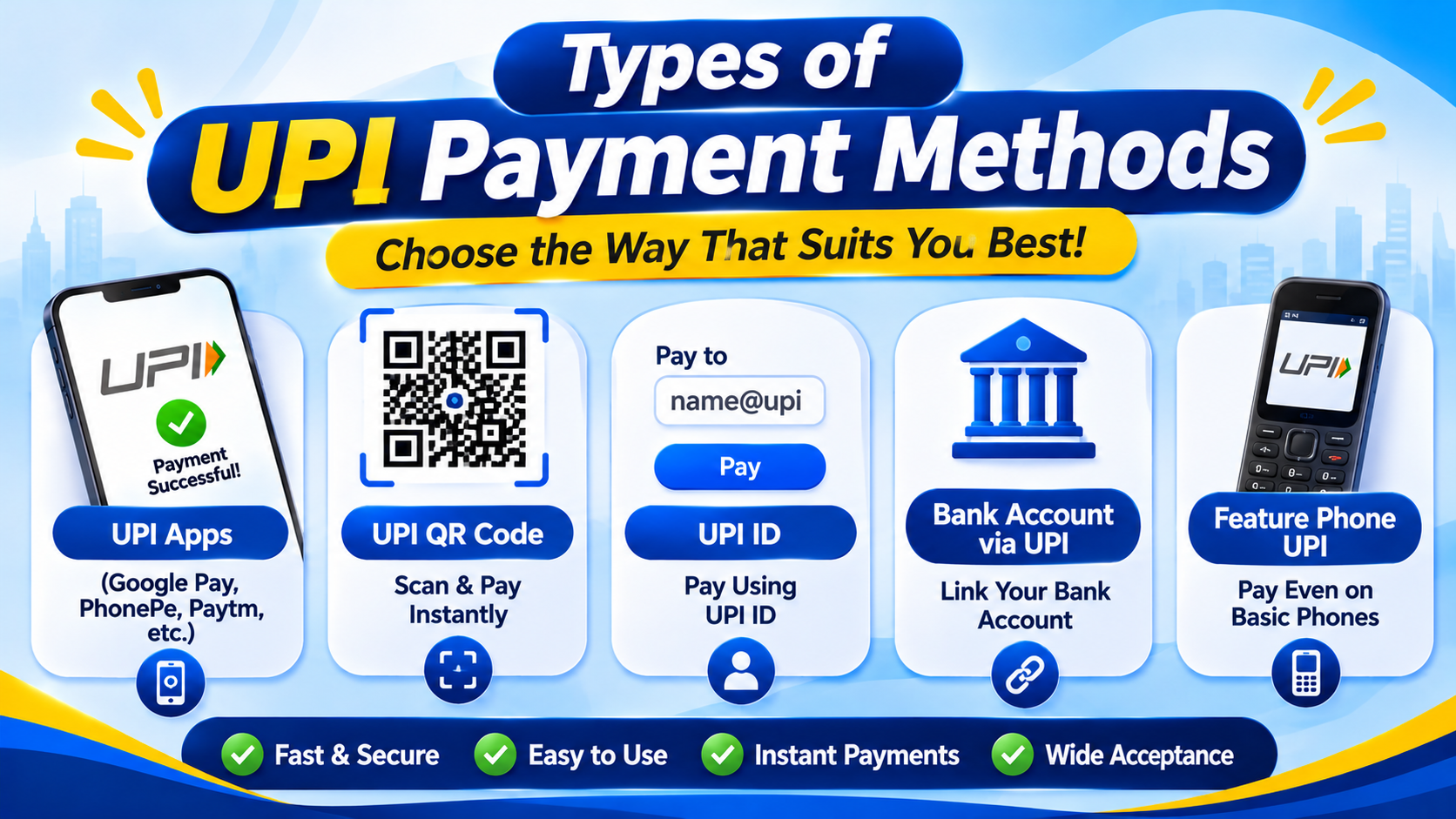
Types of UPI Payment Methods
Businesses can use different UPI payment methods depending on their customers, platform and integration requirements.
1. UPI QR Code Payment
Customers scan a QR code using a compatible UPI application and authorize the payment.
This method is useful for websites, mobile applications and businesses that want to provide QR-based payment options.
2. Dynamic QR Payment
A Dynamic QR Code is generated for a particular payment request.
It can include transaction-specific details and helps applications organize individual payment requests.
3. UPI Intent Payment
UPI Intent allows a website or application to initiate a supported UPI payment application.
It is commonly useful for mobile checkout experiences.
4. UPI Payment Links
Payment links allow businesses to share a payment request through a URL.
Customers can open the link and proceed with the available payment options.
The availability and features of each method depend on the connected payment infrastructure.
UPI Gateway vs Traditional Payment Gateway
Businesses often compare a UPI Gateway with a traditional payment gateway before selecting a payment solution.
Both can support online payment collection, but their payment methods and integration capabilities may differ.
| Comparison | UPI Gateway | Traditional Payment Gateway |
|---|---|---|
| Payment focus | UPI payments | Multiple payment methods |
| QR payments | Supported options | Depends on provider |
| UPI Intent | Available with supported integration | Depends on provider |
| Card payments | Not necessarily included | Commonly supported |
| Net banking | Not necessarily included | Commonly supported |
| API integration | Supported options | Supported options |
| Dynamic QR | Available with suitable integration | Depends on provider |
The right option depends on the business model.
If a business mainly wants to collect UPI payments, a UPI-focused payment solution may be suitable. Businesses that need cards, net banking and other payment methods may prefer a broader payment gateway.
How to Choose the Right UPI Gateway in India
Selecting the right UPI Payment Gateway is important for businesses that depend on online transactions.
Before choosing a provider, consider the following factors.
Payment Methods
Check whether the provider supports the payment methods you need, such as Dynamic QR, UPI Intent and other supported UPI options.
API Documentation
Good API documentation should include endpoints, authentication methods, request parameters and response examples.
Payment Verification
Understand how the provider verifies transactions and how payment status information is delivered.
Webhook Support
Check whether the platform supports automatic payment notifications through webhooks.
Integration Compatibility
Make sure the solution supports your website, mobile application or e-commerce platform.
Pricing and Transaction Charges
Compare setup costs, subscription plans, platform fees and any applicable payment processing charges.
A provider advertising a free UPI Gateway does not necessarily mean every connected service or payment transaction is free.
Security and Reliability
Look for HTTPS, secure authentication, transaction validation, access controls and clear service availability information.
Technical Support
Reliable technical assistance can make a significant difference during API integration and troubleshooting.
UPI Gateway Integration for Websites
Website owners can integrate UPI payment functionality to allow customers to pay directly during checkout.
The general integration process includes:
-
Create an account with a compatible payment provider.
-
Complete the required onboarding and verification.
-
Obtain API credentials.
-
Configure the payment request endpoint.
-
Add UPI QR or supported payment options to checkout.
-
Configure payment status verification.
-
Set up webhook notifications where available.
-
Test the integration before going live.
A well-implemented UPI Payment Integration can help businesses manage online payments through a more organized workflow.
UPI Gateway for Mobile Applications
Mobile applications require a convenient payment experience.
A UPI Gateway for an app can provide supported payment options such as QR codes and UPI Intent.
Developers can integrate payment APIs into Android and iOS applications to create payment requests and receive payment status updates.
Important considerations include:
-
Mobile device compatibility
-
Supported UPI applications
-
Payment request validation
-
Secure API communication
-
Payment status handling
-
Failed and pending transaction management
Proper integration helps provide a smoother checkout experience for mobile users.
UPI Gateway for Shopify and E-commerce Stores
E-commerce businesses need a payment process that connects customer orders with successful payment confirmation.
A UPI Gateway for Shopify or other e-commerce platforms can help merchants offer supported UPI payment options during checkout.
Important features to consider include:
-
UPI payment checkout
-
Dynamic QR payment support
-
Payment status verification
-
Order status updates
-
API or plugin integration
-
Webhook notifications
Before selecting a solution, Shopify merchants should verify platform compatibility and available integration methods.
What Is a Free UPI Gateway?
A Free UPI Gateway generally refers to a payment solution that allows businesses to access certain payment collection or integration features without an initial platform subscription fee.
However, the term free can mean different things depending on the provider.
For example, a provider may offer:
-
Free API access
-
Free basic integration
-
No monthly subscription
-
Free testing or sandbox access
-
No percentage-based platform fee
Businesses should always check the complete pricing structure before choosing a provider.
Also consider whether bank, payment partner or other applicable charges exist separately.
Benefits of Using a UPI Gateway for Online Businesses
A suitable UPI Gateway can offer several advantages for online businesses.
Convenient Checkout: Customers can use supported UPI payment applications and QR-based payment options.
Payment Automation: APIs and supported verification systems can reduce repetitive manual work.
Better Order Management: Payment status updates help applications manage order records more efficiently.
Developer Flexibility: APIs allow developers to connect payment functionality with existing software.
Multiple Integration Options: Suitable solutions can support websites, mobile applications and e-commerce platforms.
Improved Payment Workflow: Webhooks and automated notifications help connect payment events with business operations.
Why Choose UPI-Gateway.in?
UPI-Gateway.in focuses on UPI-based payment collection and automation for businesses that want a straightforward way to integrate UPI payments into their digital platforms.
The platform is designed around connecting supported Merchant UPI IDs or QR Codes with payment automation technology.
Key platform features include:
-
Dynamic UPI QR Generation
-
Supported UPI Intent Integration
-
Automated Payment Verification
-
Payment Status API
-
Webhook Notifications
-
Developer-Friendly API Integration
-
Website and Mobile App Support
-
E-commerce and Shopify Integration
-
Simple Integration Process
-
Affordable Platform Plans
The objective is to help businesses manage UPI payment collection through technology without unnecessarily complicating their existing merchant payment setup.
Depending on the supported arrangement, payments can be directed to the merchant's connected account rather than being held by the platform.
Businesses should review the applicable integration, settlement and pricing terms before onboarding.
Ready to explore UPI payment automation?
Visit UPI-Gateway.in to learn more about the available integration options and start your UPI integration journey.
Final Thoughts
UPI has become an important payment method for Indian online businesses. As more customers prefer digital payments, businesses need convenient ways to collect payments and manage transactions.
A modern UPI Gateway can combine Dynamic QR Codes, UPI Intent, payment APIs and automated verification into a connected payment workflow.
Whether you run an e-commerce store, Shopify website, SaaS business or mobile application, selecting a suitable UPI Payment Gateway can help simplify payment collection and improve the checkout experience.
Before choosing a provider, compare its integration features, pricing, security practices, verification process and technical support.
With the right payment infrastructure, businesses can build a more organized and efficient UPI payment experience in 2026.
Frequently Asked Questions (FAQs) About UPI Gateway
1. What is a UPI Gateway?
A UPI Gateway is a payment technology solution that allows businesses to accept UPI payments through QR codes, UPI Intent and supported payment integration methods. It helps websites and applications manage online payment collection.
2. How does a UPI Payment Gateway work?
A UPI Payment Gateway creates a payment request, provides supported UPI payment options and processes transaction information through connected payment infrastructure. The application receives payment status updates through APIs or webhooks.
3. Can I use a UPI Gateway for my website?
Yes. Businesses can integrate a UPI Gateway into their websites using supported APIs, plugins or other integration methods to accept UPI payments from customers.
4. What is a Dynamic UPI QR Code?
A Dynamic UPI QR Code is generated for a specific payment request. It can include payment details such as the transaction amount and reference, helping businesses manage individual transactions.
Ready to connect UPI to your checkout?
JaduPe provides current service, eligibility and plan details. Review them before you begin.
Explore JaduPe ↗Related articles.
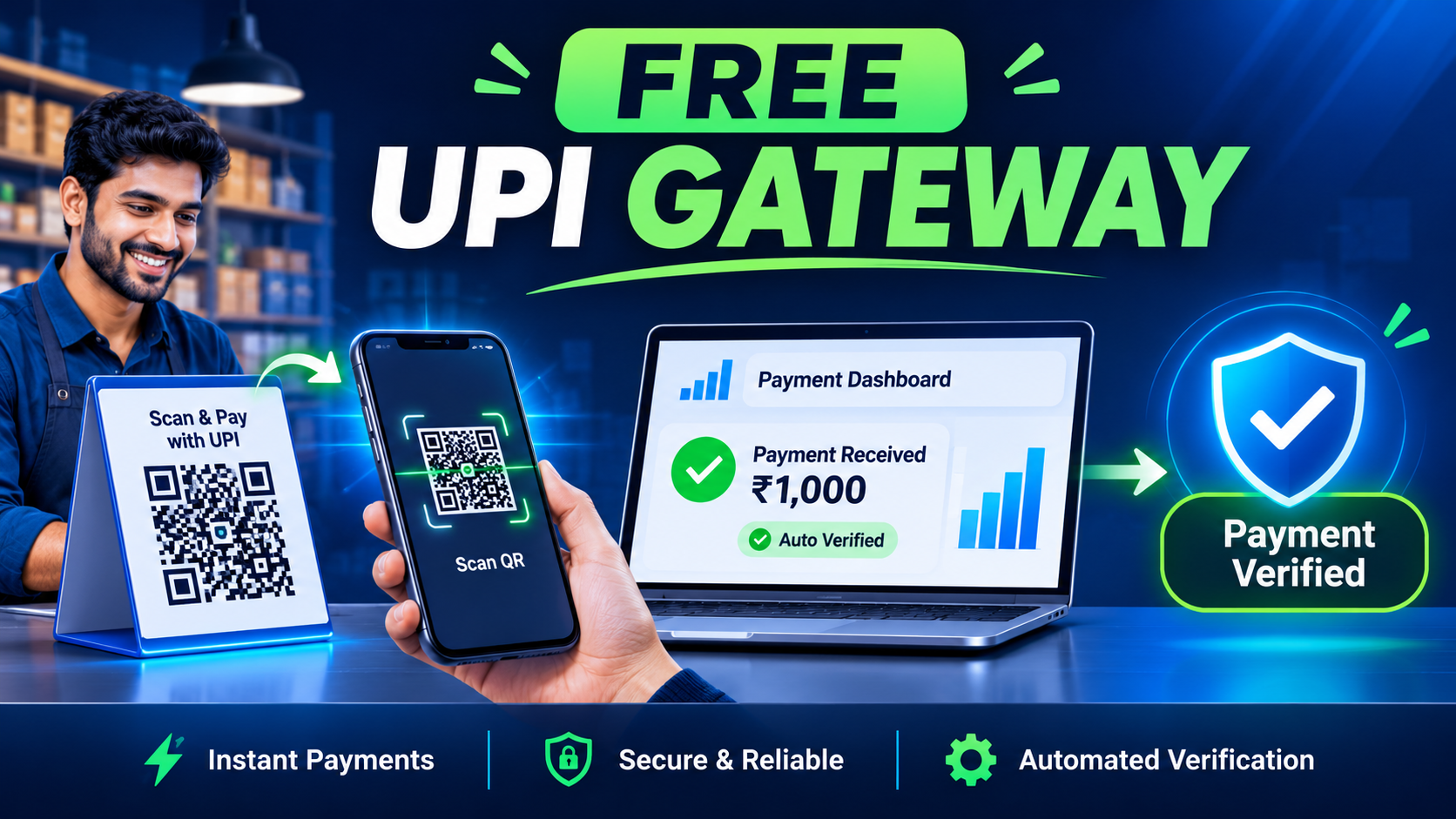
Free UPI Gateway: How Businesses Can Accept UPI Payments at Low Cost
Looking for a free UPI Gateway to accept online payments without expensive transaction charges? Discover how businesses can use Dynamic UPI QR Codes, UPI Intent, Merchant UPI IDs and payment APIs to simplify UPI payment collection and automate payment verification at a lower cost.
Read article →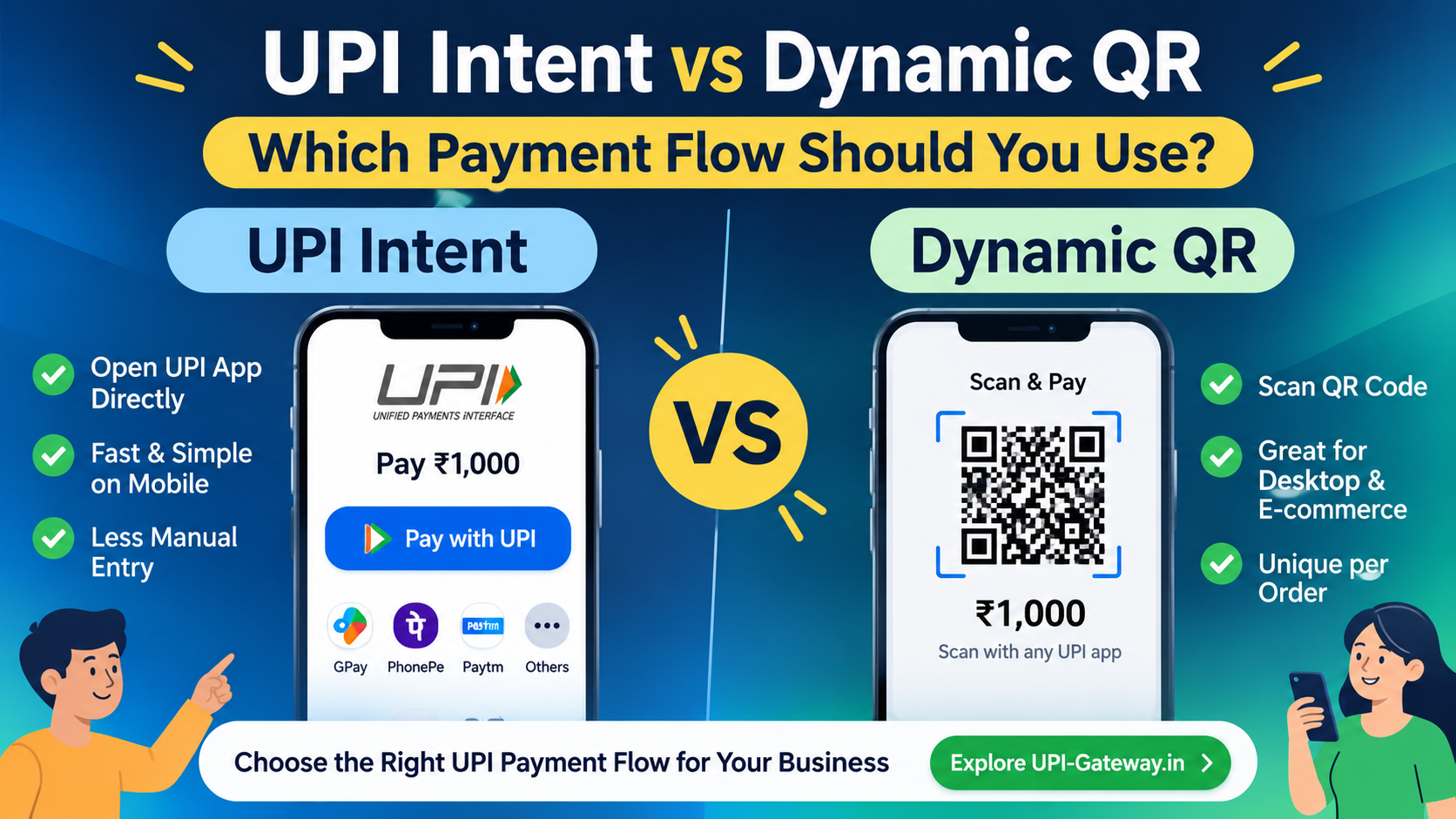
UPI Intent vs Dynamic QR – Choose the Right Payment Flow
Should your business use UPI Intent or Dynamic QR? Understand the differences, benefits and payment integration options for online businesses.
Read article →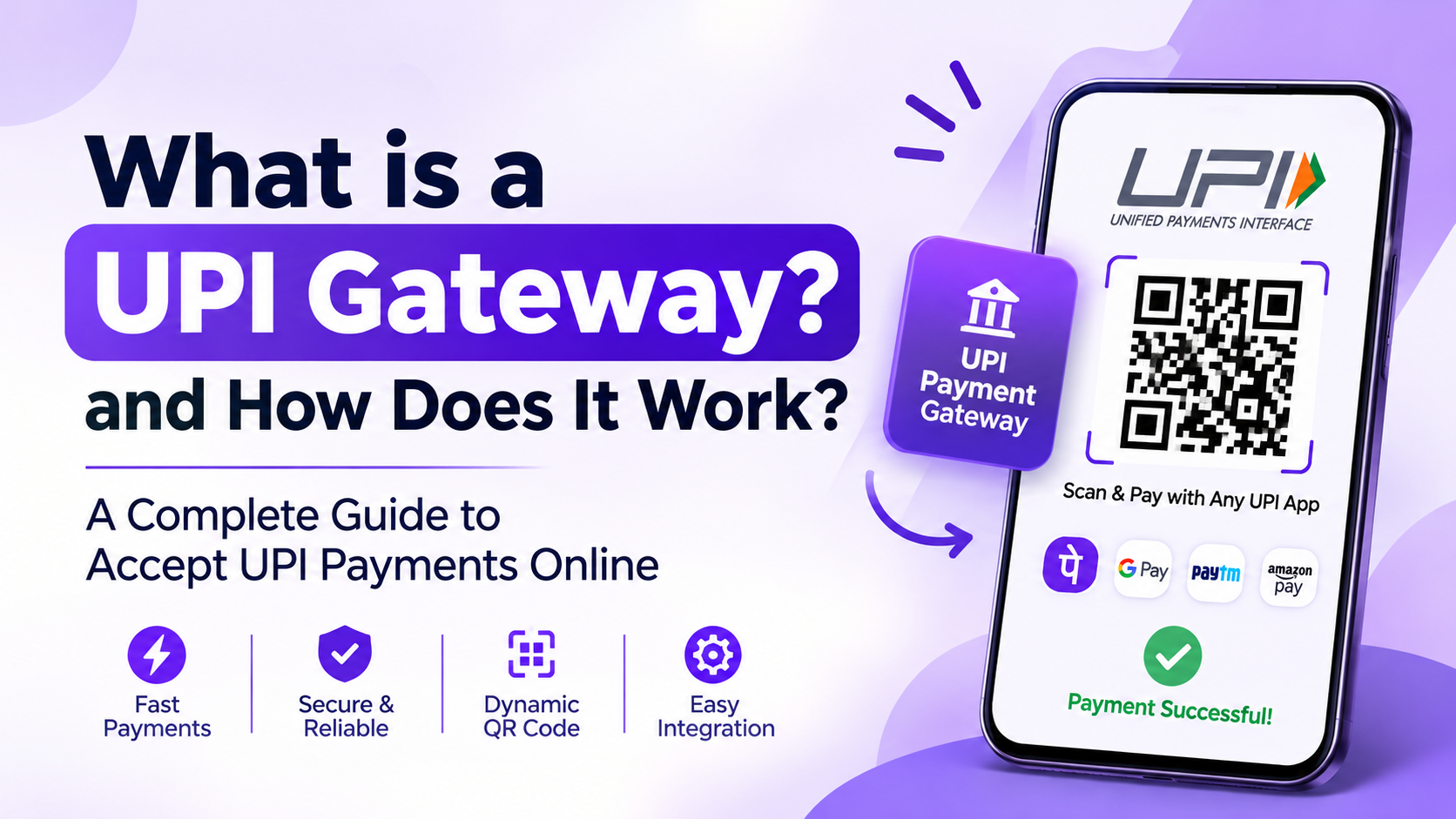
What Is a UPI Gateway? Complete Guide to UPI Payments
Understand UPI payment gateways, Dynamic QR Codes, UPI Intent, payment APIs and automated payment verification for online businesses.
Read article →