UPI Intent vs Dynamic QR – Choose the Right Payment Flow
Should your business use UPI Intent or Dynamic QR? Understand the differences, benefits and payment integration options for online businesses.
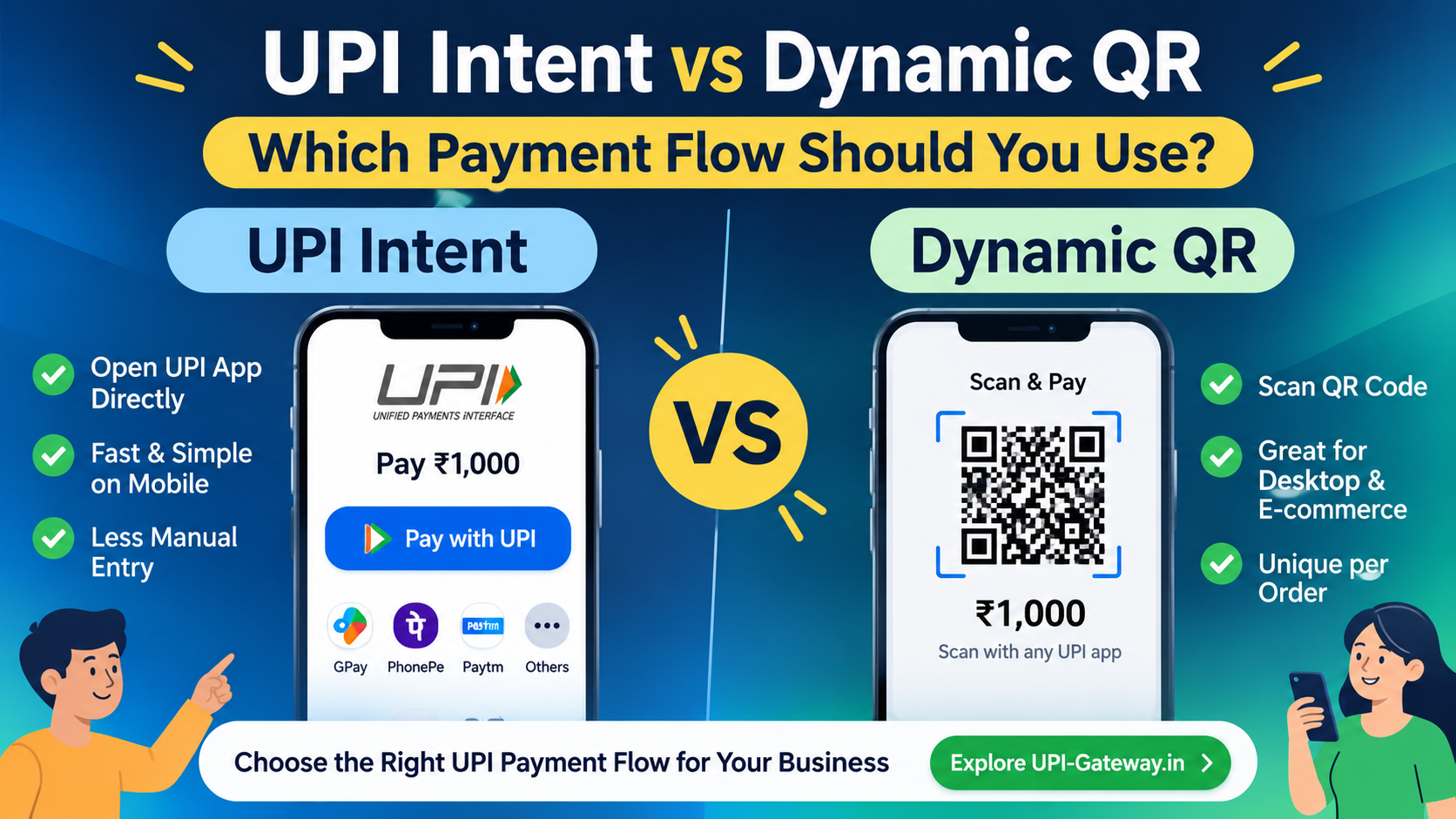
UPI Intent vs Dynamic QR: Which Payment Flow Should You Use?
UPI has become one of the most popular ways to make digital payments in India. From shopping websites and mobile applications to online services and e-commerce stores, businesses are increasingly using UPI to collect payments from customers.
However, when integrating UPI payments into a website or application, businesses often face an important question: Should you use UPI Intent or Dynamic QR payments?
Both payment methods allow customers to pay using UPI apps, but they work differently and offer different user experiences.
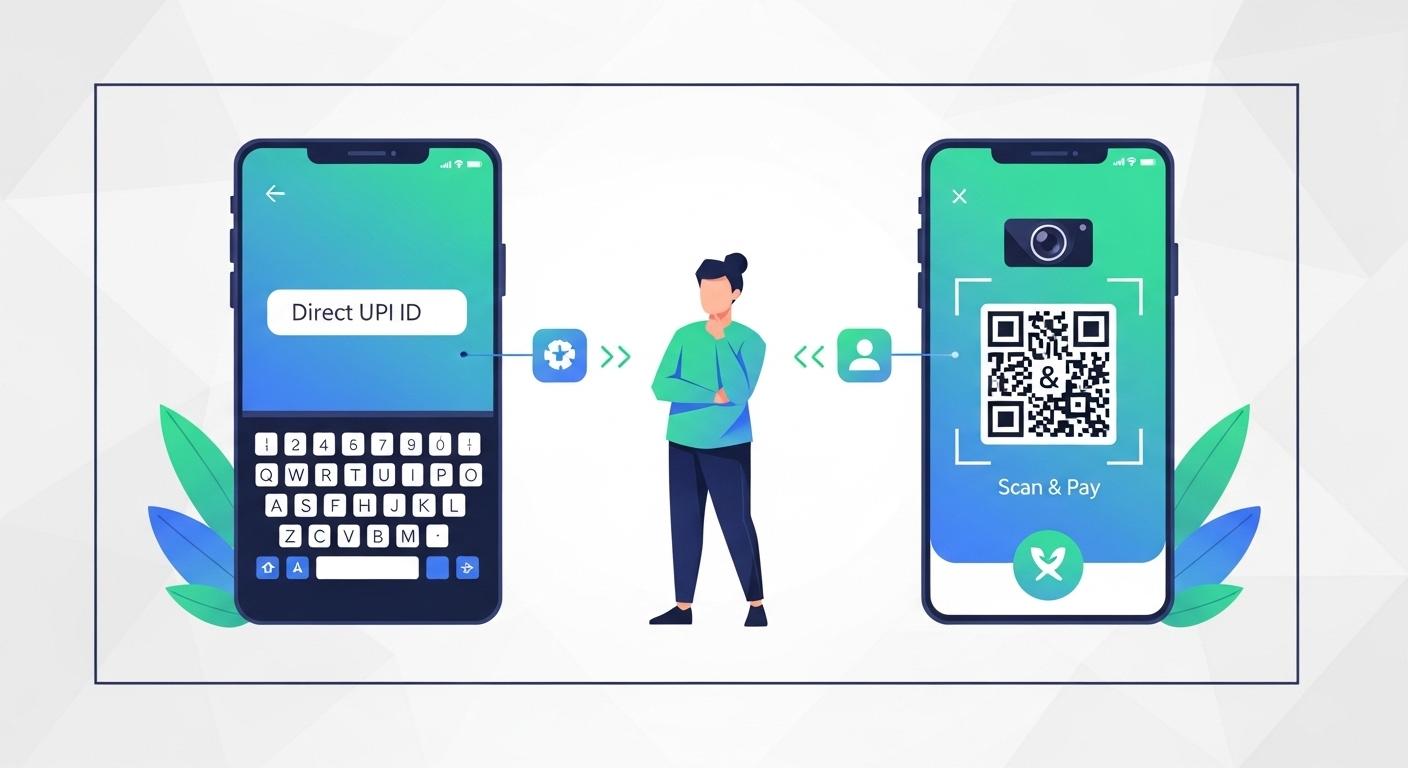
UPI Intent allows customers to open a supported UPI application directly from a payment button, while Dynamic QR displays a unique QR code that customers can scan to complete their payment.
In this guide, we will explain UPI Intent vs Dynamic QR, how both payment flows work, their advantages, limitations and which option may be suitable for your business.
What Is UPI Intent Payment?
UPI Intent is a payment flow that allows a website or mobile application to redirect customers to a supported UPI application to complete a payment.
Instead of manually entering payment details, customers can select a UPI payment option and open an available UPI app on their device.
The payment request can contain information such as:
-
Merchant UPI ID
-
Payment amount
-
Transaction reference
-
Payment description
How UPI Intent Works
A typical UPI Intent payment flow looks like this:
-
A customer selects a product or service.
-
The website or application creates a payment request.
-
The customer clicks the Pay with UPI button.
-
The system opens a supported UPI application.
-
The customer reviews and authorizes the payment.
-
The UPI application processes the transaction.
-
The merchant's payment system checks the transaction status.
UPI Intent can provide a convenient checkout experience, especially for customers using mobile devices.
Advantages of UPI Intent
1. Faster Payment Experience
Customers can open their preferred supported UPI application without manually scanning a QR code.
2. Convenient for Mobile Applications
UPI Intent is particularly useful for Android applications where customers can initiate payments directly from the app.
3. Less Manual Work
Payment information can be passed through the payment request, reducing the need for customers to enter transaction details manually.
4. Simple Checkout Flow
A Pay with UPI button can make the payment process straightforward for mobile users.
Limitations of UPI Intent
UPI Intent also has some limitations:
-
It depends on compatible UPI applications being available.
-
The experience may differ between devices and operating systems.
-
Customers may need to switch between applications.
-
Desktop users may not get the same seamless experience.
-
Payment completion must still be verified independently.
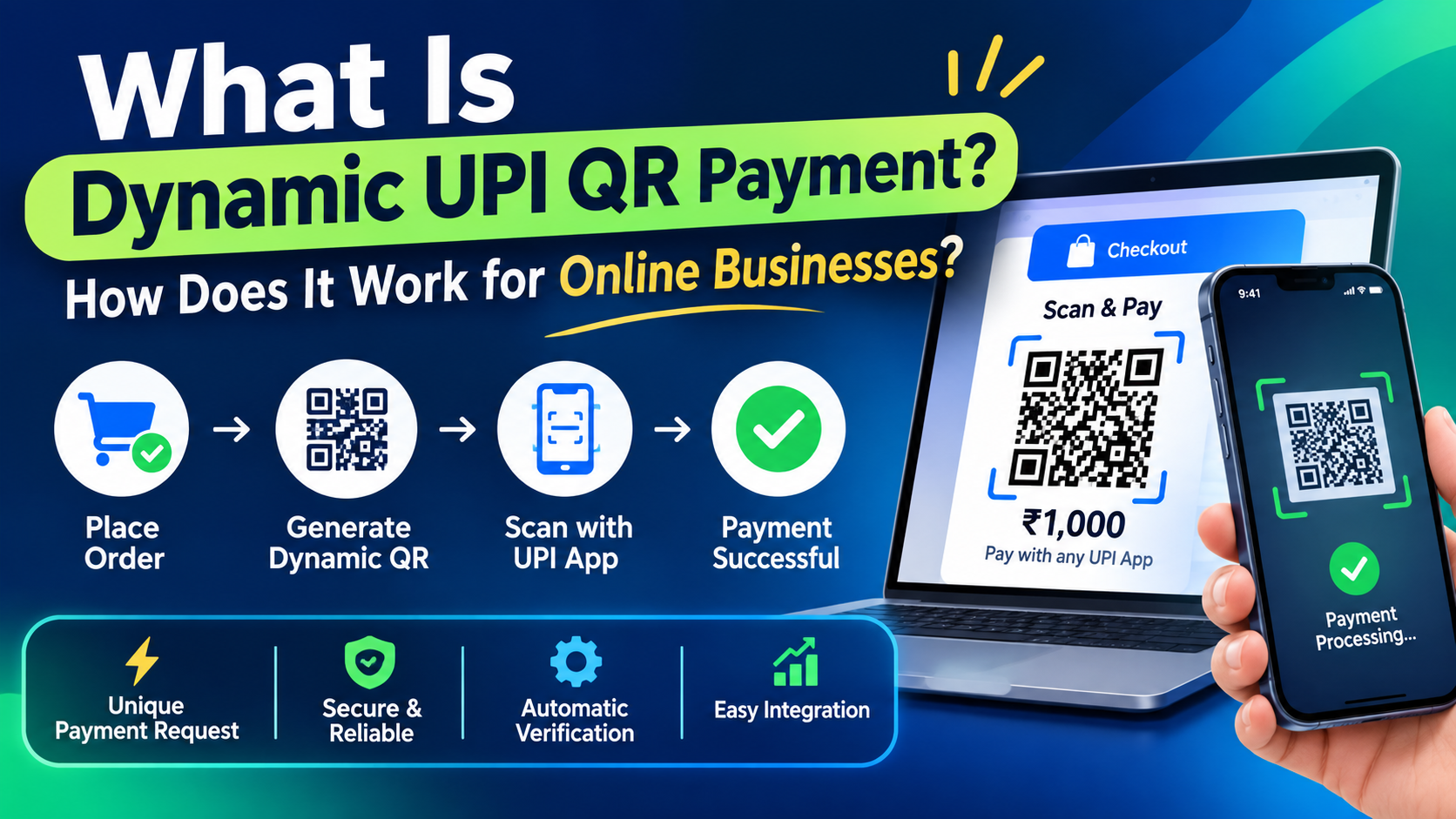
What Is Dynamic UPI QR Payment?
Dynamic UPI QR is a payment method where a unique QR code is generated for a particular payment request.
Unlike a static QR code that may be reused for multiple transactions, a Dynamic UPI QR can contain transaction-specific information, such as the payment amount and reference.
Customers scan the QR code using a supported UPI application and authorize the payment.
How Dynamic UPI QR Works
A typical Dynamic QR payment flow works as follows:
-
A customer places an order on a website.
-
The system generates a payment request.
-
A unique UPI QR code is displayed on the checkout page.
-
The customer scans the QR code using a UPI application.
-
The payment details appear in the UPI app.
-
The customer authorizes the payment.
-
The system checks the payment status.
-
The order is updated after successful verification.
Dynamic UPI QR is particularly useful for desktop websites, online stores and businesses that want to display payment requests directly on their checkout pages.
Advantages of Dynamic UPI QR
1. Easy Payment Collection
Customers can scan the displayed QR code using a compatible UPI application.
2. Useful for Desktop Payments
Customers shopping on a laptop or desktop can scan the QR code using their mobile phone.
3. Transaction-Specific Payment Requests
A Dynamic QR can be generated for individual orders with their corresponding amounts and references.
4. Suitable for E-commerce Websites
Online stores can display a separate QR code for each checkout session or order.
5. Supports Payment Automation
When connected with a suitable payment verification system, Dynamic QR payments can help automate payment status updates.
Limitations of Dynamic UPI QR
-
Customers generally need a second device when scanning a QR displayed on their mobile screen.
-
Scanning adds an extra step compared with a direct mobile payment flow.
-
Customers must open a UPI application to complete the transaction.
-
Payment status still needs reliable verification.
UPI Intent vs Dynamic QR: Key Differences
Both methods support UPI-based payment collection, but their checkout experiences are different.
| Feature | UPI Intent | Dynamic UPI QR |
|---|---|---|
| Payment Method | Opens a UPI app | Customer scans a QR |
| Best Suited For | Mobile devices | Desktop and mobile |
| Customer Action | Click Pay with UPI | Scan QR code |
| Payment Details | Passed through payment request | Encoded in QR |
| Mobile Experience | Direct app launch where supported | Requires QR scanning or another display device |
| Desktop Experience | Depends on device and app support | Convenient with a mobile scanner |
| Order Reference | Can be included | Can be included |
| Payment Verification | Required | Required |
| Automation | Supported through integration | Supported through integration |
Which Payment Flow Is Better for Your Business?
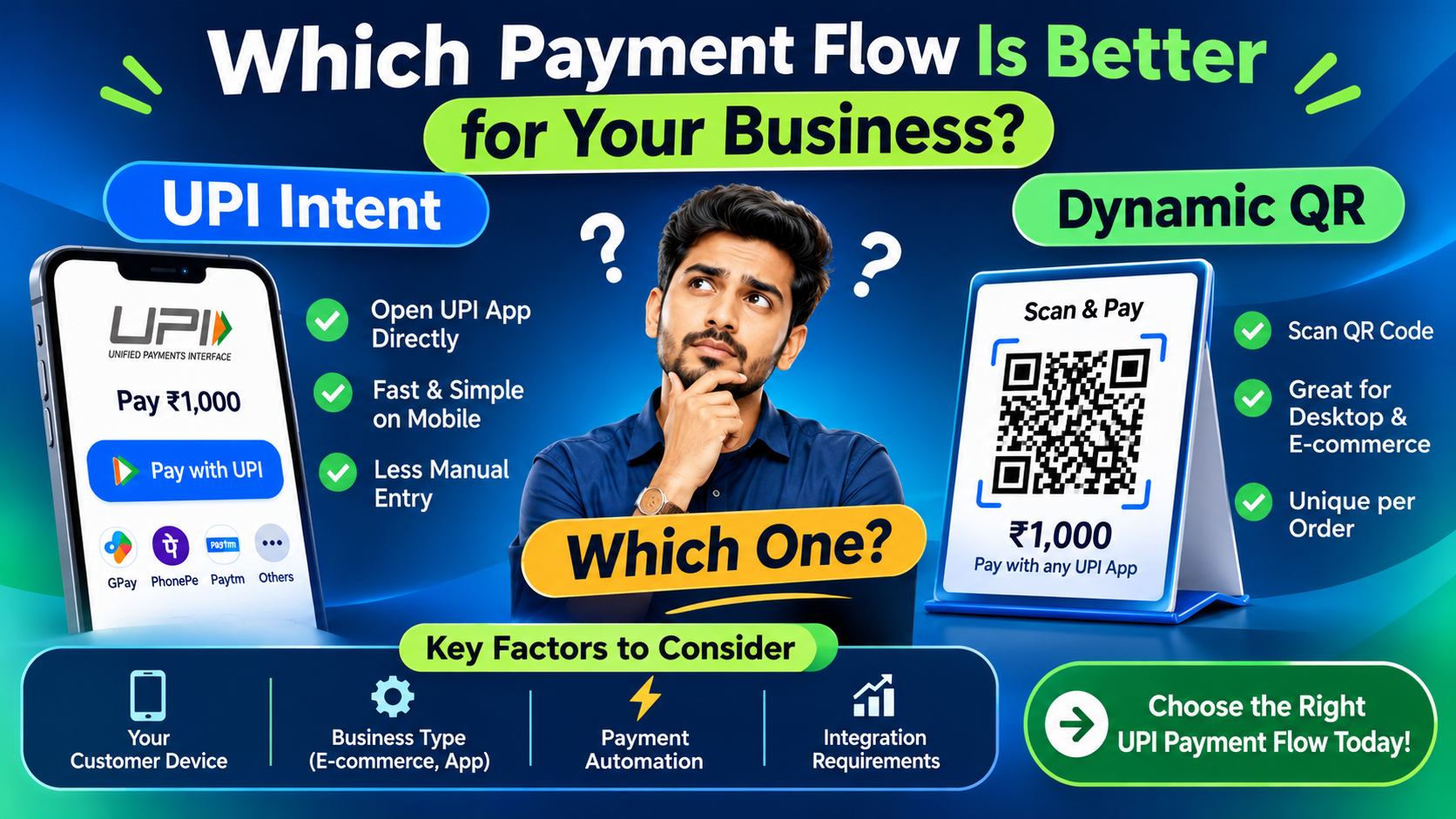
There is no single payment method that works best for every business. The right choice depends on your website, application, customer devices and checkout requirements.
Choose UPI Intent If:
UPI Intent may be a better choice when:
-
You operate an Android mobile application.
-
Most customers make payments using smartphones.
-
You want a direct Pay with UPI button.
-
You want to reduce manual payment entry.
-
Your checkout process is designed around mobile users.
Choose Dynamic QR If:
Dynamic UPI QR may be a better choice when:
-
You operate a desktop-focused website.
-
Customers need to scan and pay using their mobile phones.
-
You run an e-commerce store.
-
You want a unique QR code for each order.
-
You want to display payment requests on a checkout page.
Can You Use Both UPI Intent and Dynamic QR?
Yes. In many cases, supporting both payment flows can provide a better checkout experience.
For example, a business can offer UPI Intent to customers using compatible mobile devices and Dynamic QR as an alternative payment option.
A combined payment flow may look like this:
-
Customer creates an order.
-
The website generates a payment request.
-
Mobile customers receive a UPI Intent option.
-
Desktop customers see a Dynamic QR code.
-
Customer completes the payment.
-
The backend checks the payment status.
-
A verified successful payment triggers the order confirmation process.
This approach allows businesses to offer different payment experiences without depending on only one payment flow.
Why Automated UPI Payment Verification Is Important
Choosing UPI Intent or Dynamic QR is only one part of building a reliable payment system.
The next important step is verifying whether the payment was actually completed.
A customer returning to your website does not automatically mean that the payment was successful. Similarly, a screenshot shared by a customer should not be treated as final payment confirmation.
A proper payment integration should include:
-
Unique order and transaction references.
-
Payment status verification.
-
Backend-side transaction checks.
-
Secure webhook notifications.
-
Duplicate payment handling.
-
Pending and failed payment management.
-
Order updates after verified payment confirmation.
A UPI Payment
Ready to connect UPI to your checkout?
JaduPe provides current service, eligibility and plan details. Review them before you begin.
Explore JaduPe ↗Related articles.

Free UPI Gateway: How Businesses Can Accept UPI Payments at Low Cost
Looking for a free UPI Gateway to accept online payments without expensive transaction charges? Discover how businesses can use Dynamic UPI QR Codes, UPI Intent, Merchant UPI IDs and payment APIs to simplify UPI payment collection and automate payment verification at a lower cost.
Read article →
UPI Gateway: Complete Guide for Businesses in 2026
Learn what a UPI Gateway is, how it works, and explore Dynamic QR, UPI Intent, payment APIs, automated verification and integration for online businesses.
Read article →
What Is a UPI Gateway? Complete Guide to UPI Payments
Understand UPI payment gateways, Dynamic QR Codes, UPI Intent, payment APIs and automated payment verification for online businesses.
Read article →